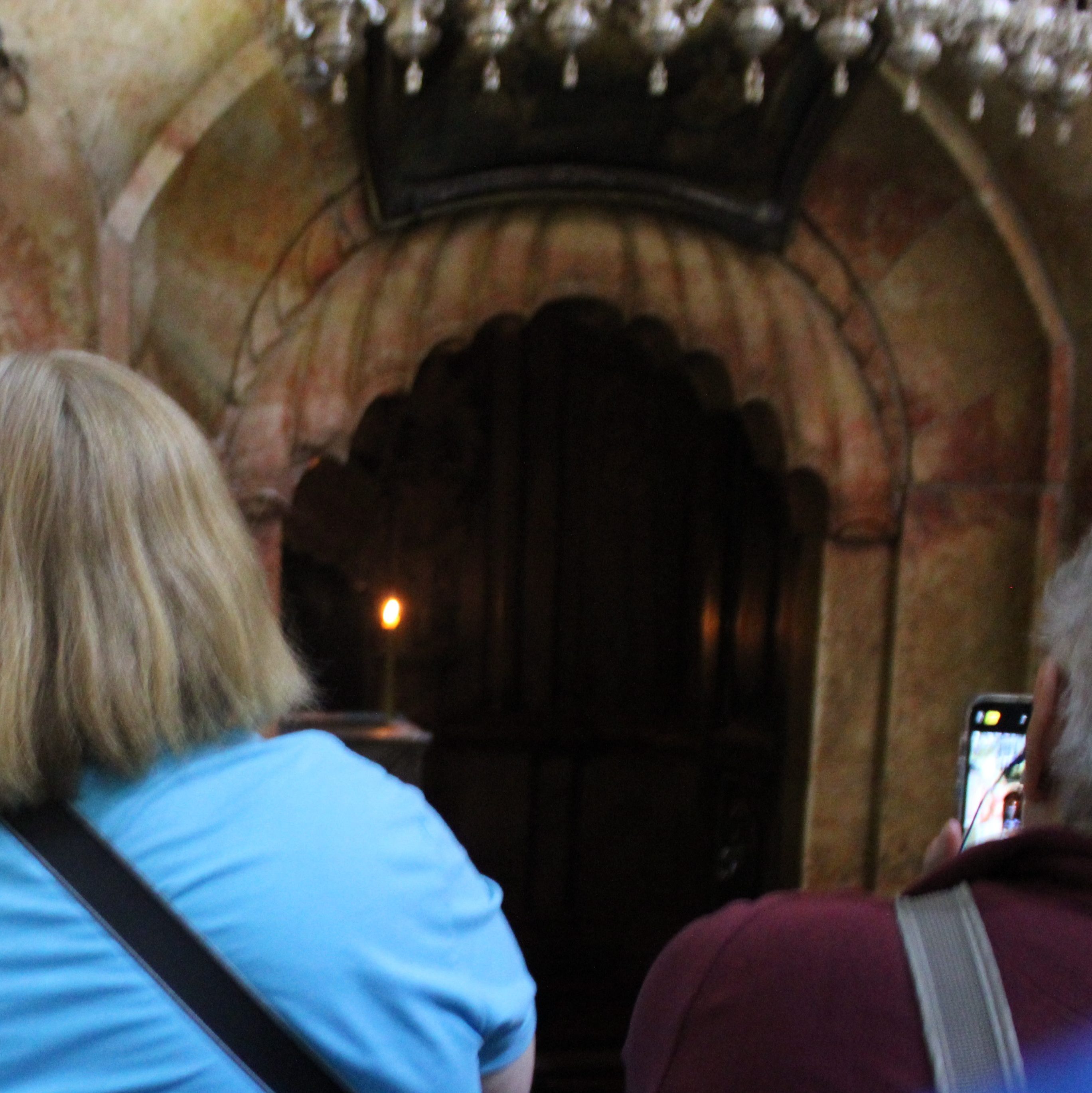
The end of the line wasn’t visible – so many people crowded into such a tight space. They were acting as we so often do in such situations. Patience was fraying; grumbling intensified as time passed. A man in our group was grabbed by the arm, others wanting to move him as they tried to push their way forward. Such behavior wouldn’t have been great no matter the circumstances, but we were waiting to see one of the sites contended to be Jesus’ tomb.
Somehow irritation and grousing didn’t seem fitting for hundreds of people, many of whom declared themselves to be followers of Jesus.
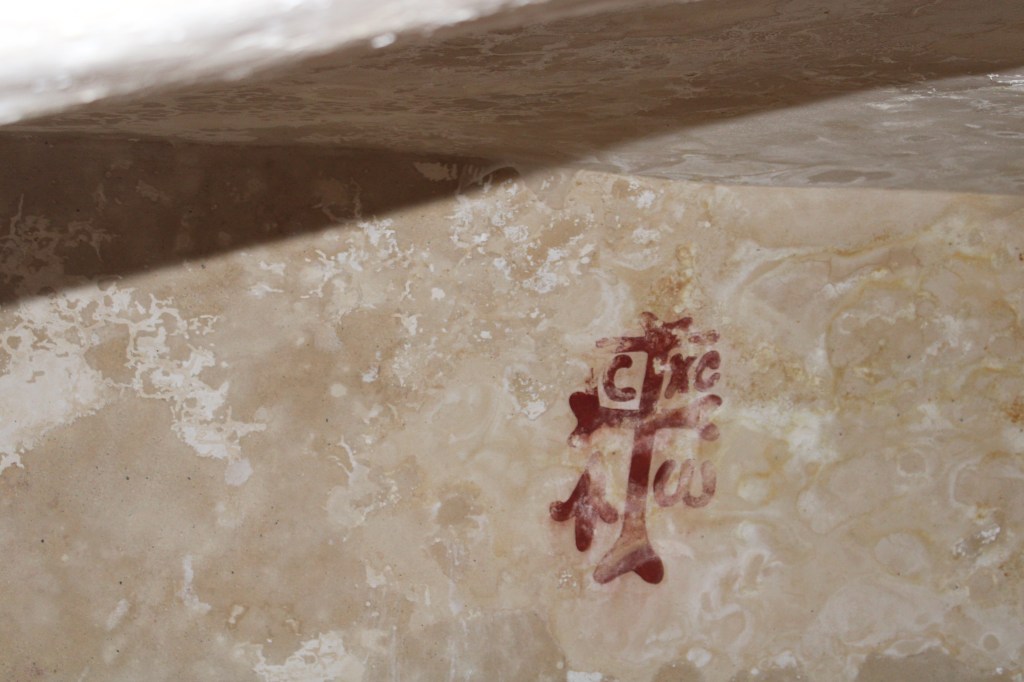
Still, I have to admit that my nerves were also threadbare from the sardine-can conditions, but, finally, the moment arrived when I was allowed to bow down and enter the revered space. I wish I could tell you that the experience was miraculous or even awe-inspiring, but before my eyes could adjust to the lower light, the priest directing the human traffic ordered me to leave.
The disappointment ached deep inside my gut and lingered there. Suddenly, weariness washed over me and tears threatened to spill.
These months after returning from Jerusalem, the emotions of those moments abide with me, but now I put them next to words from John’s gospel: “Early on the first day of the week, while it was still dark, Mary Magdalene came to the tomb…”
My heart rests on the words “while it was still dark.”
I can only imagine that tears still flowed with little, if any, prompting, and Mary’s body felt cold and aching as she processed the horrific trauma and grief of watching Jesus – her teacher, her friend, her Lord — executed in such a prolonged and agonizing way. Everything was most decidedly “still dark.”
As I watch the news from Israel-Palestine these days, much continues to seem to be immersed in darkness in that land considered holy by so many. Places we explored with wonder are now scenes of violence.
Of course, we aren’t exempt from that darkness. We may not be experiencing such visible state-led clashes inside places of worship, but hate crimes, often directed toward those of faith, continue to escalate.
More mass shootings have occurred in our midst this year than there have been days.
Divisions among people seem as striking as ever.
In our own lives, loss can seem pervasive. Seemingly daily, news of another horrific diagnosis in a loved one finds our way to us. Job losses loom. Relationships unravel. We fight within ourselves to tamp down the edge in our voices. Somedays, we seek out the solitude of our vehicles or a restroom to hold our heads in our hands and allow the sighs and tears a moment of expression.
Looking back over the last year, so many faces come to mind of cherished friends and family who’ve died, including those of two dear children.
Many of us make our way to tombs of all sorts while it is still dark.
However, we can’t stop there. We must keep reading Mary’s story.
Seeing the tomb rolled away, her darkness deepens. The last straw breaks. She believed Jesus’ body had been stolen. “Mary stood weeping outside the tomb.”
***
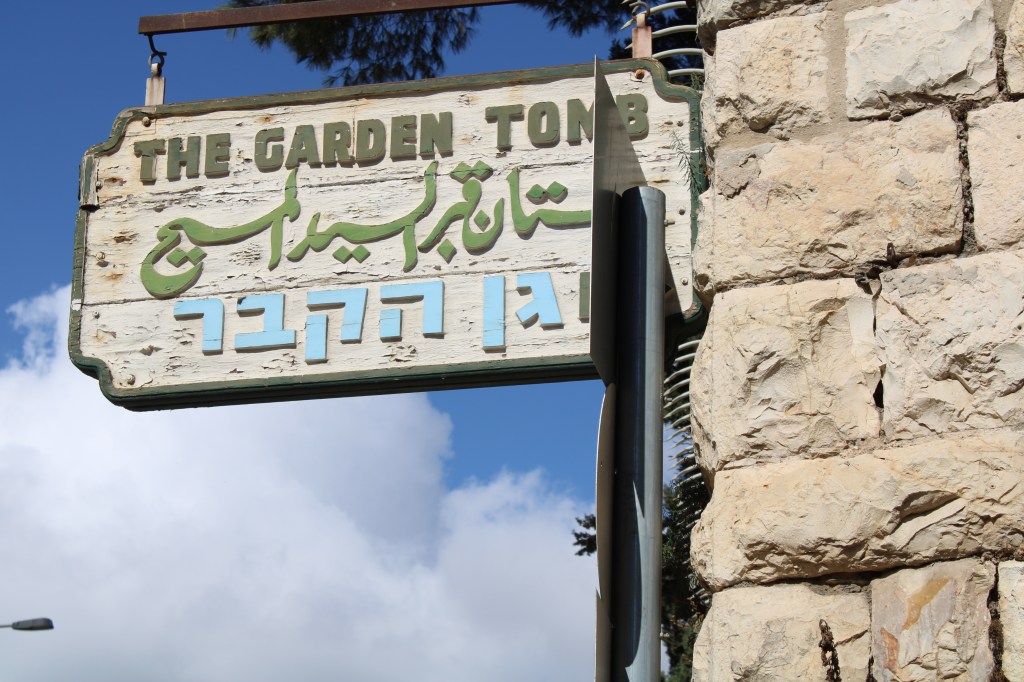
The next day on our pilgrimage we were to visit another site argued to have served as Jesus’ tomb. I was not optimistic, but this one proved to be far less crowded and the area around it had been cared for as a beautiful garden with places for prayer and meditation.
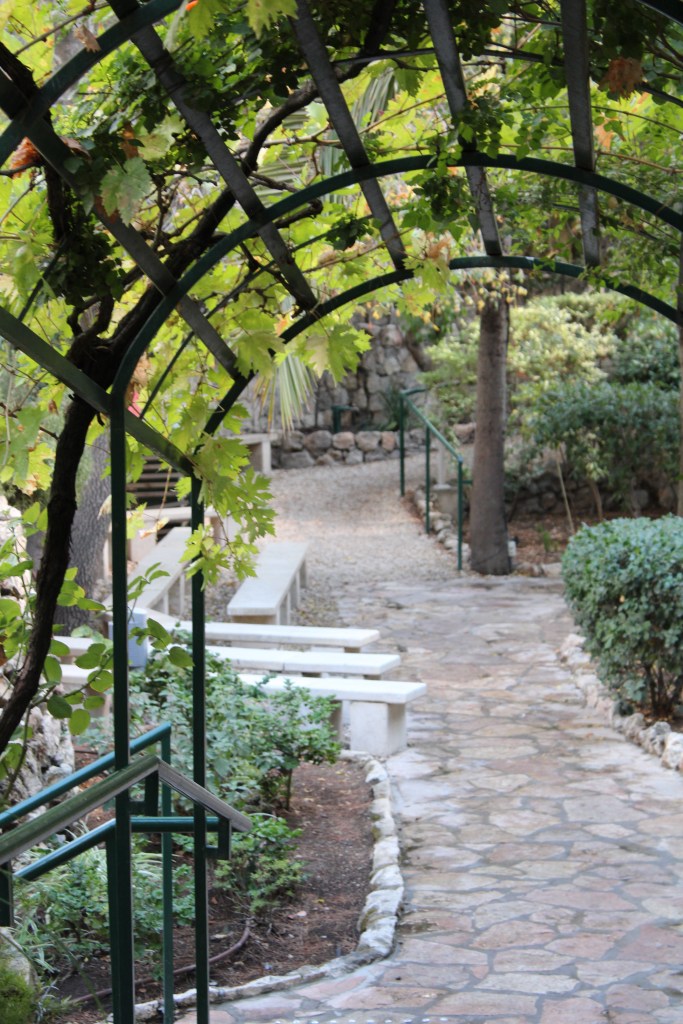
One of the guides shared the reasons why some believe this location to be the true tomb site. I couldn’t really weigh the archeological and geographic arguments – not without much more information, but what I could assess was the wonder and love with which he spoke, the kindness and light in his eyes, the caring that had brought him from another country to this land to help share Jesus’ message.
He left our group with the elements for the Lord’s Supper and, after partaking, we made our way to the tomb site.
Once inside, there was time to pause, to touch the rock walls, to pray — to, through our spirits, hear as Mary did Jesus call our name.
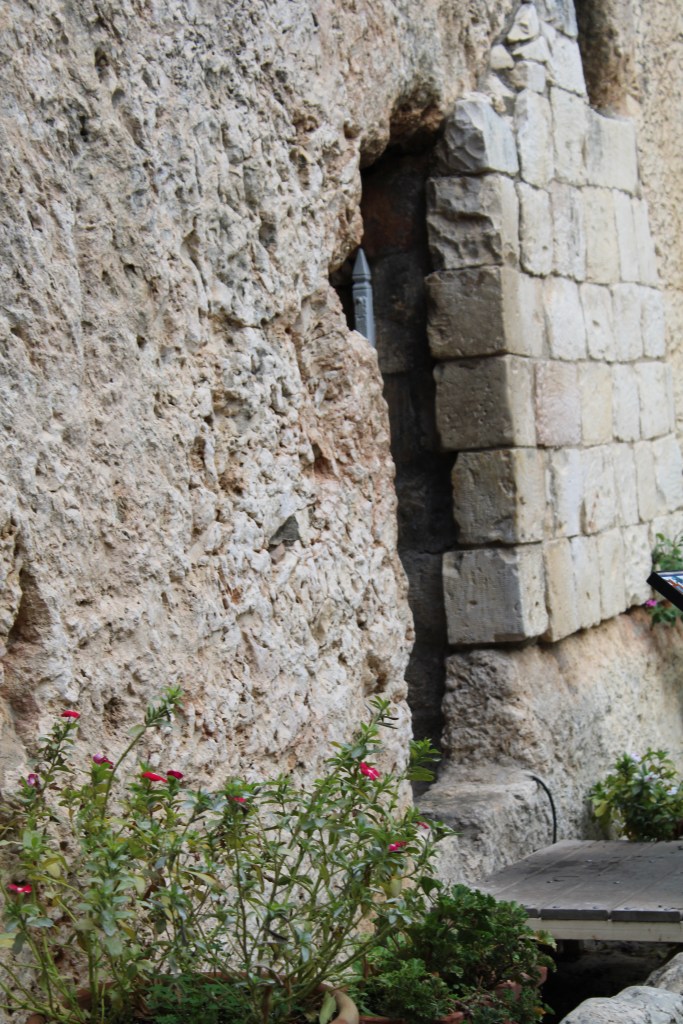
Jesus said to her, “Mary!” She turned and said to him in Hebrew, “Rabbouni!” (which means Teacher).”
On this and every day, no matter the darkness, we can also pause and hear him call our name. In response, we can be followers who heed the directive the Teacher gave us the night before his death: “that you love one another as I have loved you.”
To do so, we must also remember that Jesus didn’t ask Mary to linger at the empty tomb, but he sent her out to proclaim his message. Jesus told Mary to go and tell.
She did. She declared, “I have seen the Lord.”
May you see the Lord in someone’s eyes today and may you show others Jesus through yours.

 Minding the Light