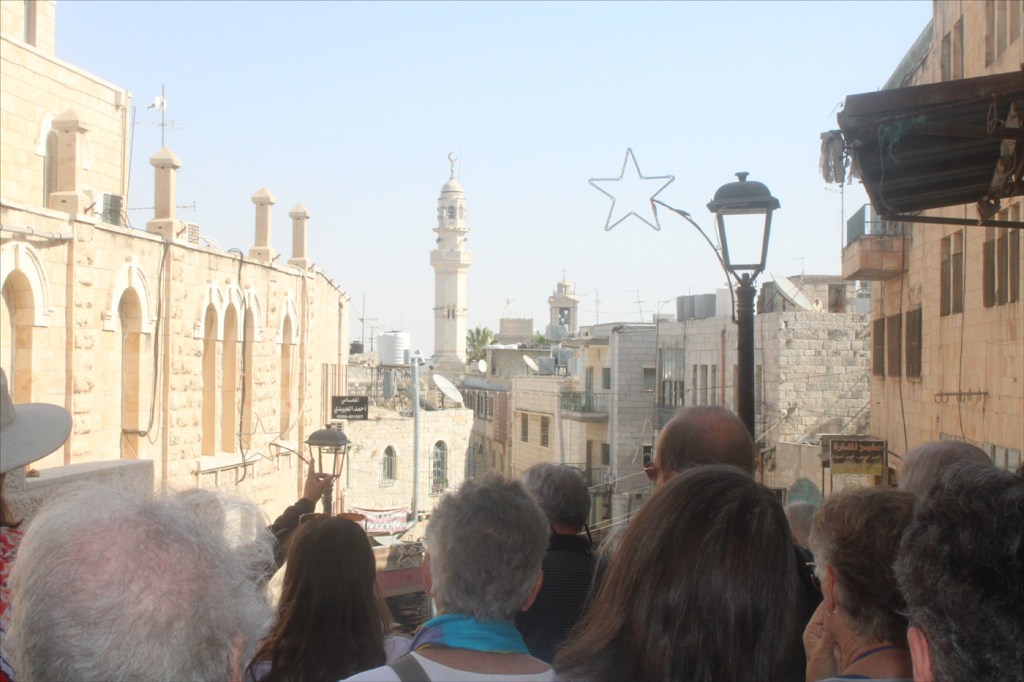
O little town of Bethlehem, how still we see thee lie
A half-century of visions of Bethlehem shaped by church plays and TV depictions of Jesus’ birth were abruptly replaced when one billboard caught my eye. The sign off a busy roadway displayed a bright yellow star.
In Bethlehem one might expect to see lots of heavenly star images of the kind that would lead magi to the Christ child. That was not this one. The advertising star was edged in red and included a smiling face.
We’d been told that Hardee’s operated an eatery in Bethlehem, but the reality didn’t sink in until I saw the billboard for its restaurant. KFC was promoted on another sign not far away, and multiple versions of coffee shops such as Square Bucks with a familiar-looking green awning were prevalent.
All that said, we were glad to be in the city celebrated as Jesus Christ’s birthplace. The trip to Bethlehem on the Saturday we arrived took longer than expected. Without warning Israel had shut down access to the main city gate leading to Bethlehem.
The reason given was innocuous, but everyone believed there was more to the story. Tension between Israel and Palestine was palpable.
About two weeks before we left home on our pilgrimage to the Holy Land, the U.S. State Department issued a travel advisory for Israel, the West Bank and Gaza. It read: “Terrorist groups, lone-wolf terrorists and other violent extremists continue plotting possible attacks in Israel and the West Bank and Gaza…. Violence can occur… without warning.”
For Gaza, the advisory was straight to the point: “Do Not Travel To: Gaza due to terrorism, civil unrest, and armed conflict.”
For Israel and the West Bank, the State Department urged “increased caution” and noted that U.S. government employees were not allowed to take personal trips into the West Bank and couldn’t make any overnight trips to Bethlehem.
The internationally celebrated city lies in the central West Bank of Palestine.
Already, clashes between Israelis and Palestinians had prompted our guides to skip two destinations on our itinerary.
One was Nablus, also in the West Bank, and home to a church that houses Jacob’s Well, where Jesus met the Samaritan woman, who likely was Jesus’ first evangelist.
In mid-October, according to the Israeli human rights organization B’Tselem, armed Palestinians killed an Israeli soldier. The next morning, the Israeli military shut down access to the city of Nablus and its surrounding villages. The B’Tselem report said, “Restricting the movement of more than 200,000 Palestinians has paralyzed life in the area, forcing hundreds of businesses to stop operating and harming the livelihoods of all their dependents.”
Describing the impact on the people, B’Tselem concluded, “This is what apartheid looks like.”
One of our guides, a Palestinian resident of Jerusalem, spoke of the ongoing tension. She estimated that about two Palestinians are killed by Israeli soldiers or police each week.
Sadly, her figure was too low. B’Tselem reports that more than 150 Palestinians have died in violent incidents this year, while about 20 Israelis have also been killed.
The hopes and fears of all the years are met in thee tonight.
The violence, heartache, and despair are all in evidence in Bethlehem.
The city remains home to multiple refugee camps, including Dheisheh Refugee Camp, which was established in 1949 and is home to about 13,000 refugees who were displaced during the 1948 and 1967 wars.
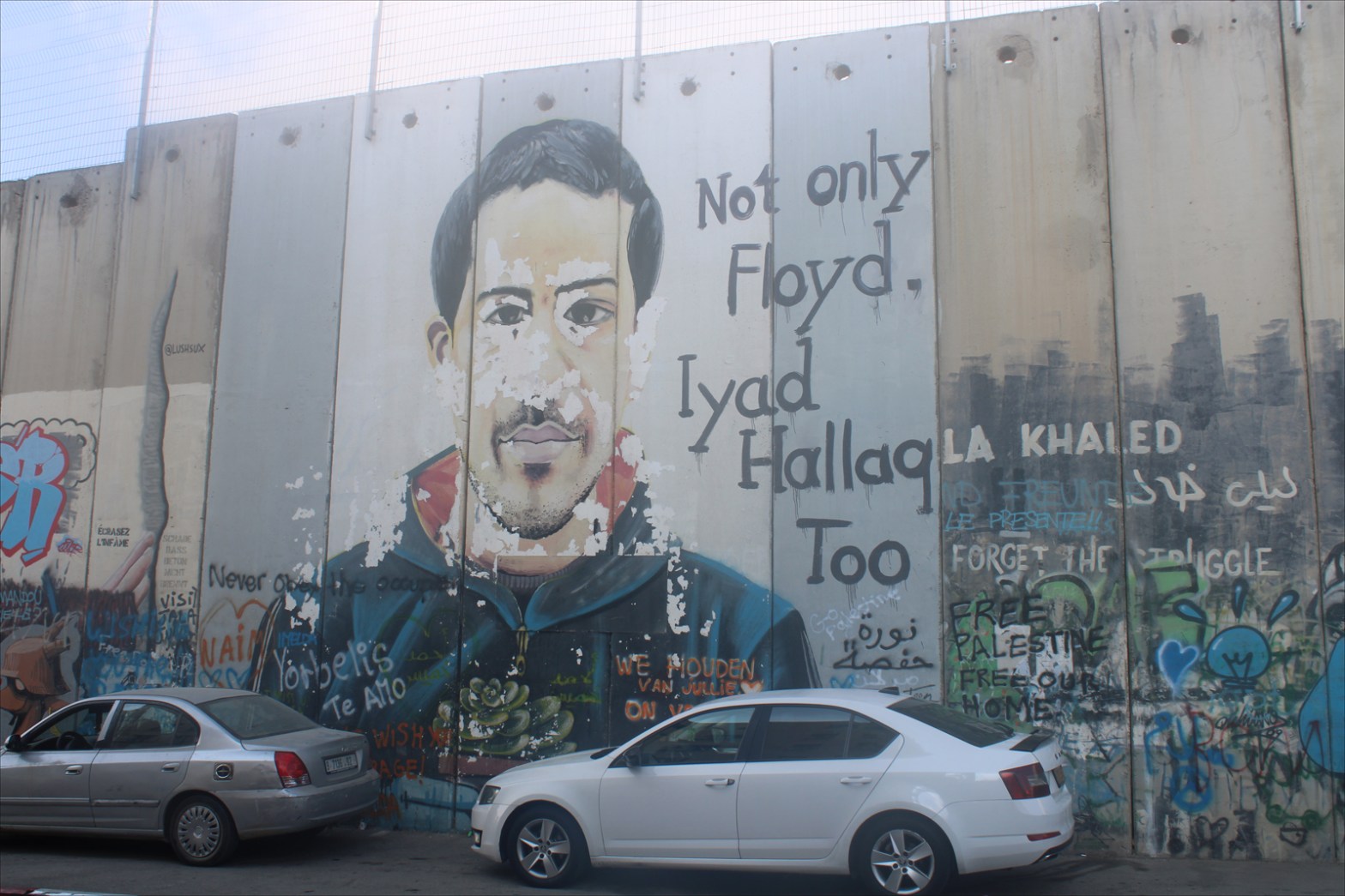
Then, there is The Wall, sometimes called the Separation Wall or the West Bank Barrier. Regardless of what it’s called, the 30’ high concrete wall cuts off Bethlehem from the rest of Israel. The barrier extends about 435 miles.
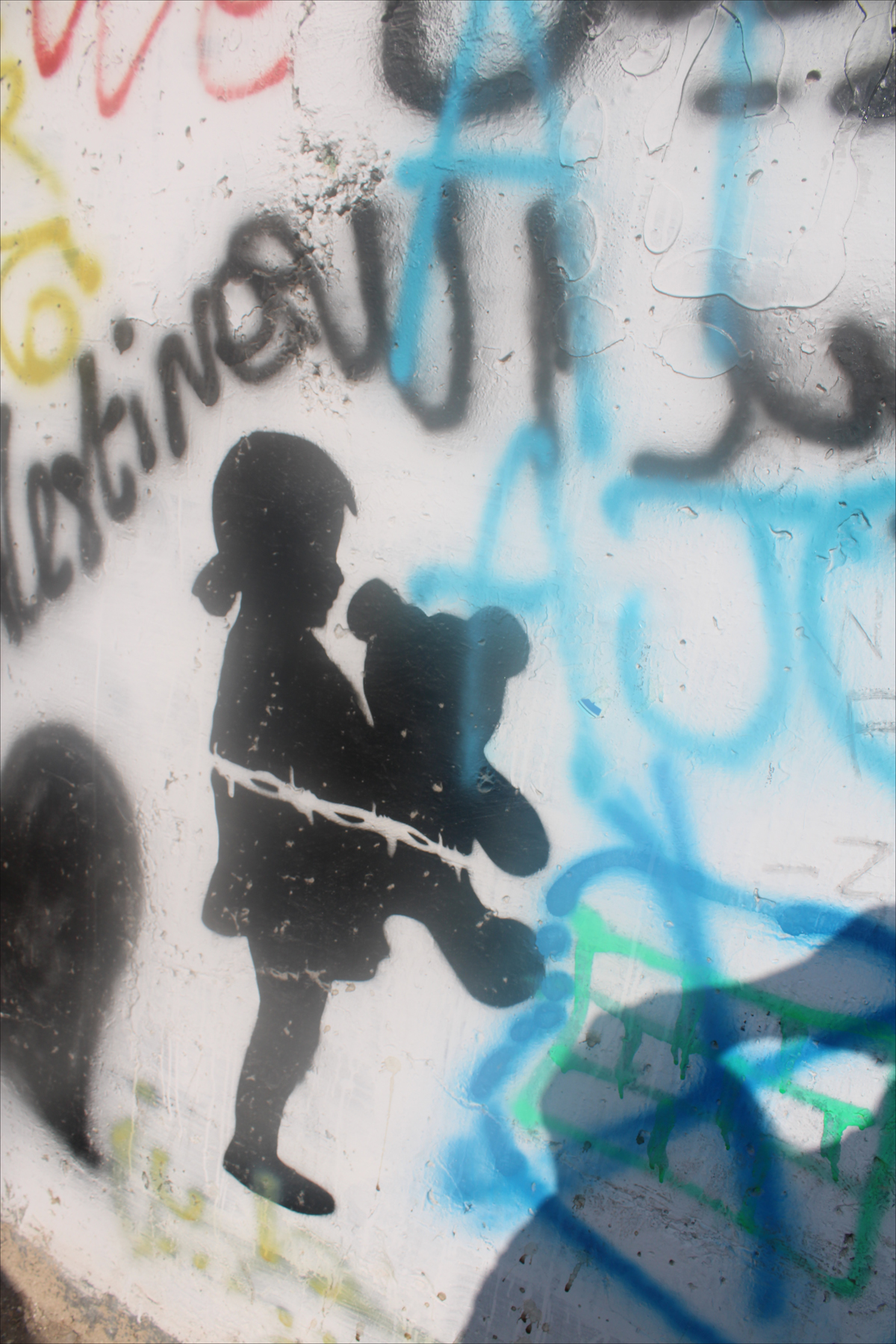
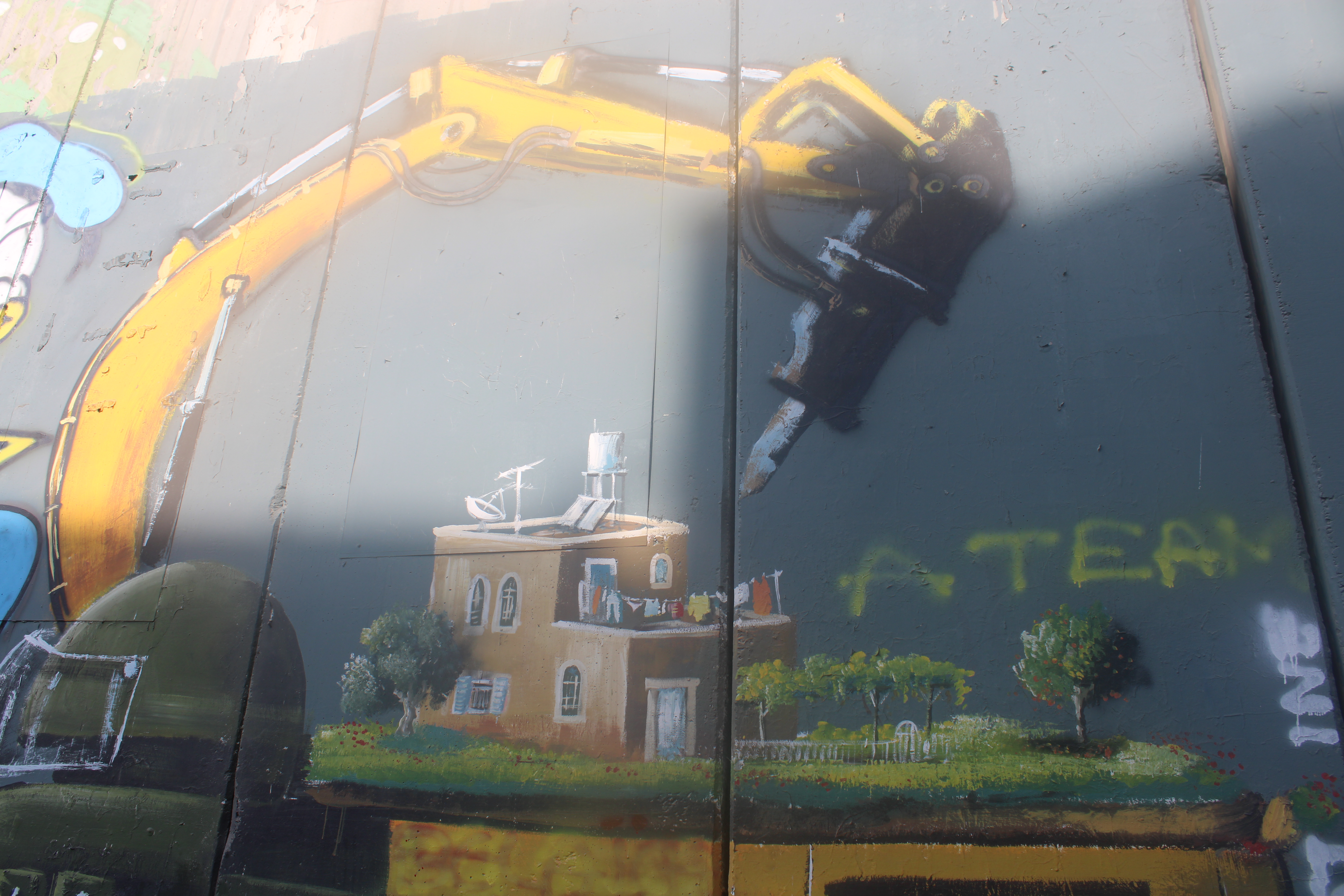
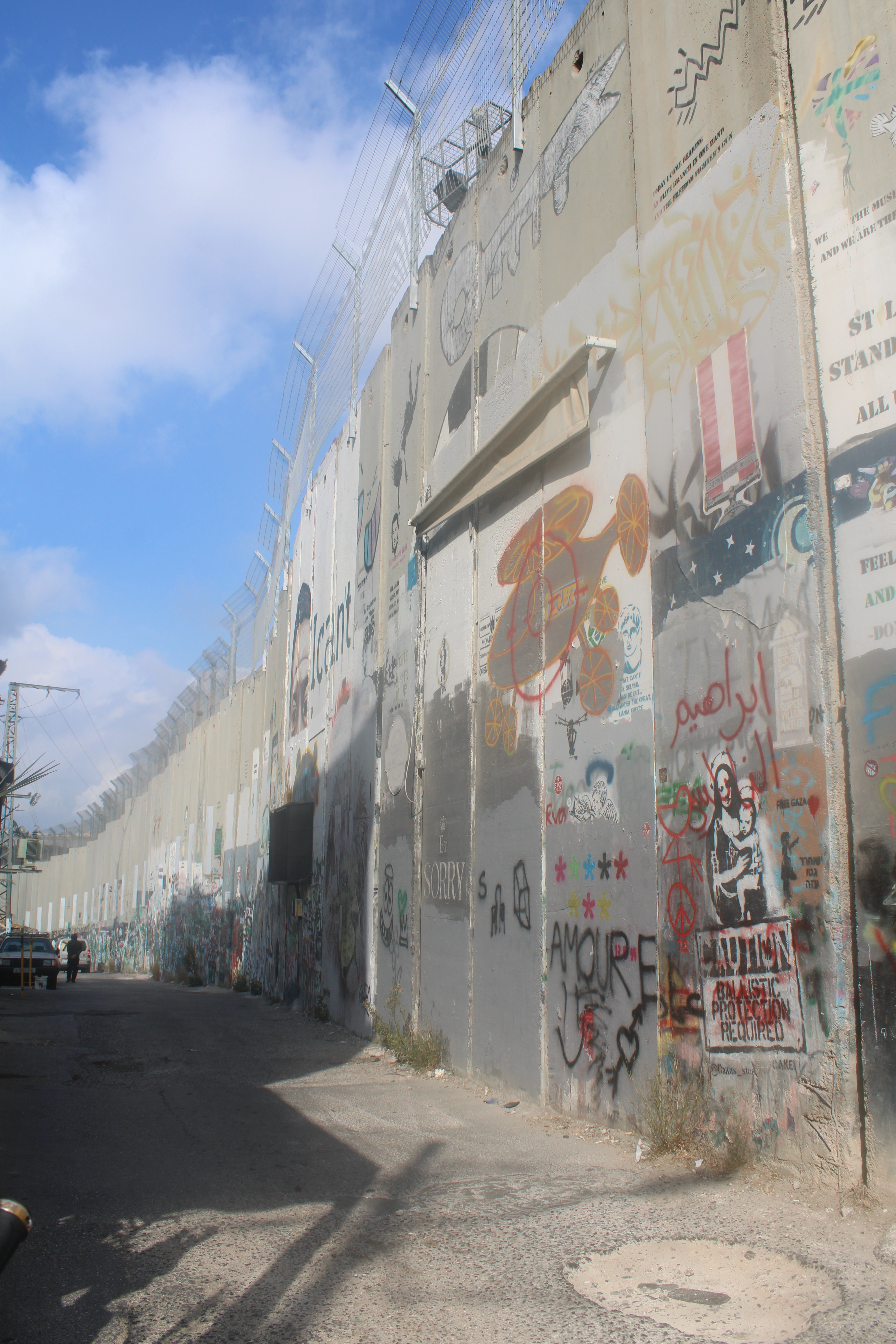
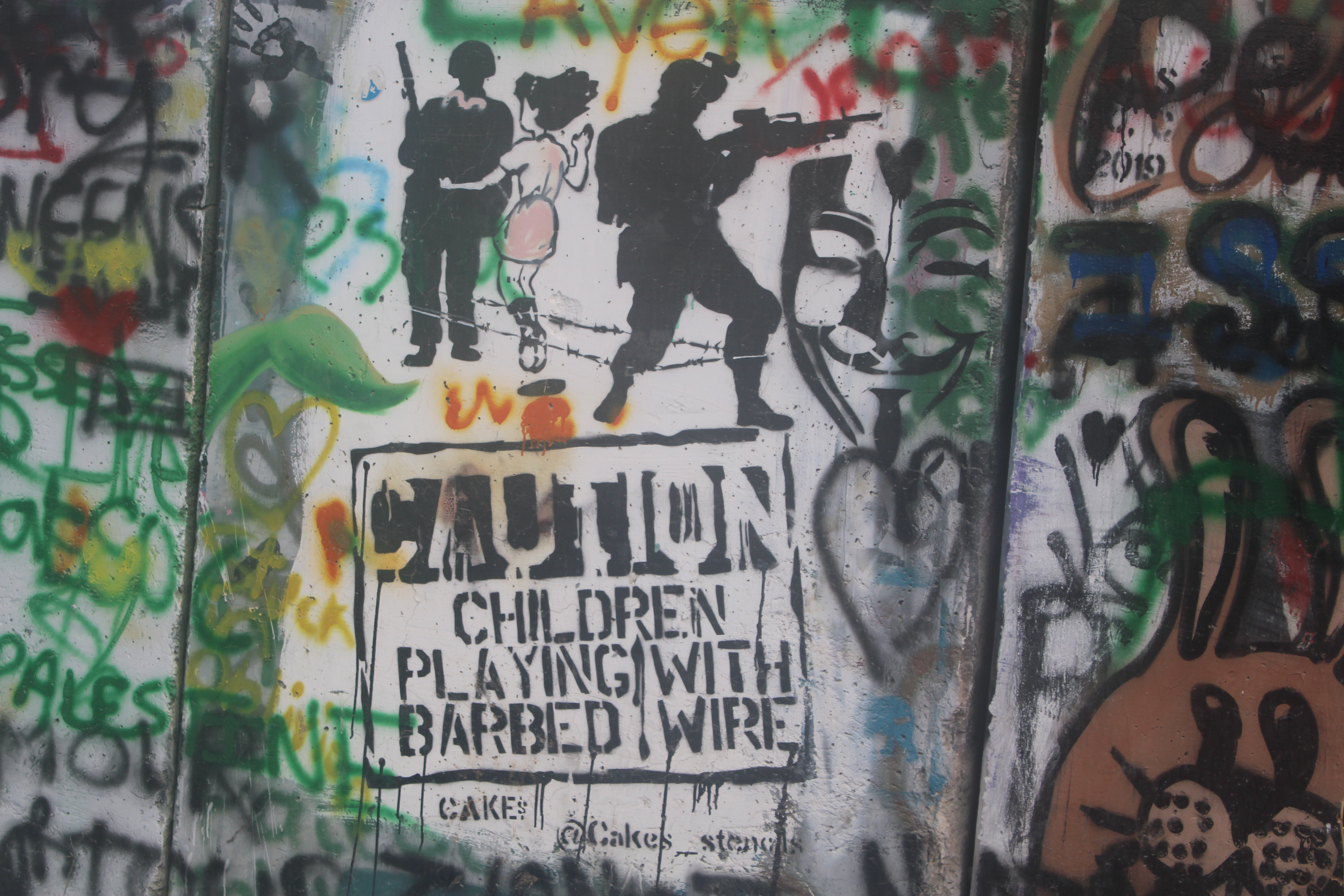
A columnist in The Wire wrote, “The wall is a constrictor that crushes Palestinian space, mind and body. The wall is a prison. To feel blessed to visit Bethlehem is a spiritual crime.”
And praises sing to God the king, and peace to men on earth.
Yet, I found a profound blessing in Bethlehem and felt a call renewed.
In Bethlehem, certainly there are those who respond to the oppression with violence. Multiple Palestinians we spoke with in Bethlehem and elsewhere repeated the same statement: “We are being strangled.”
And, many are fighting back, and many are doing so through art and presence.
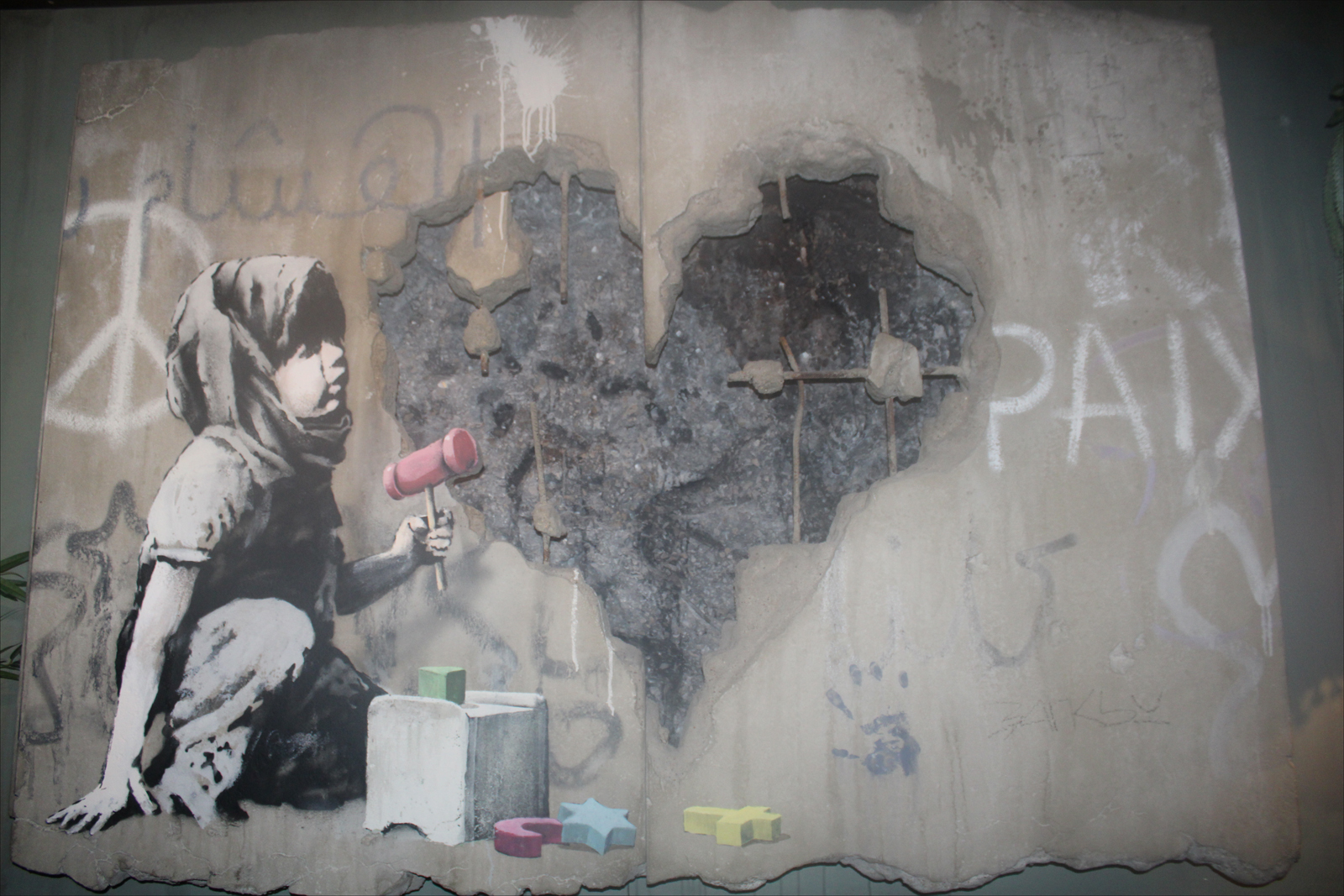
The anonymous artist Banksy opened a hotel with a view of The Wall.
The Walled Off Hotel has been described as “a hotel, museum, protest and gallery all in one, packed with the artworks and angry brilliance of its owner, British street artist Banksy.”
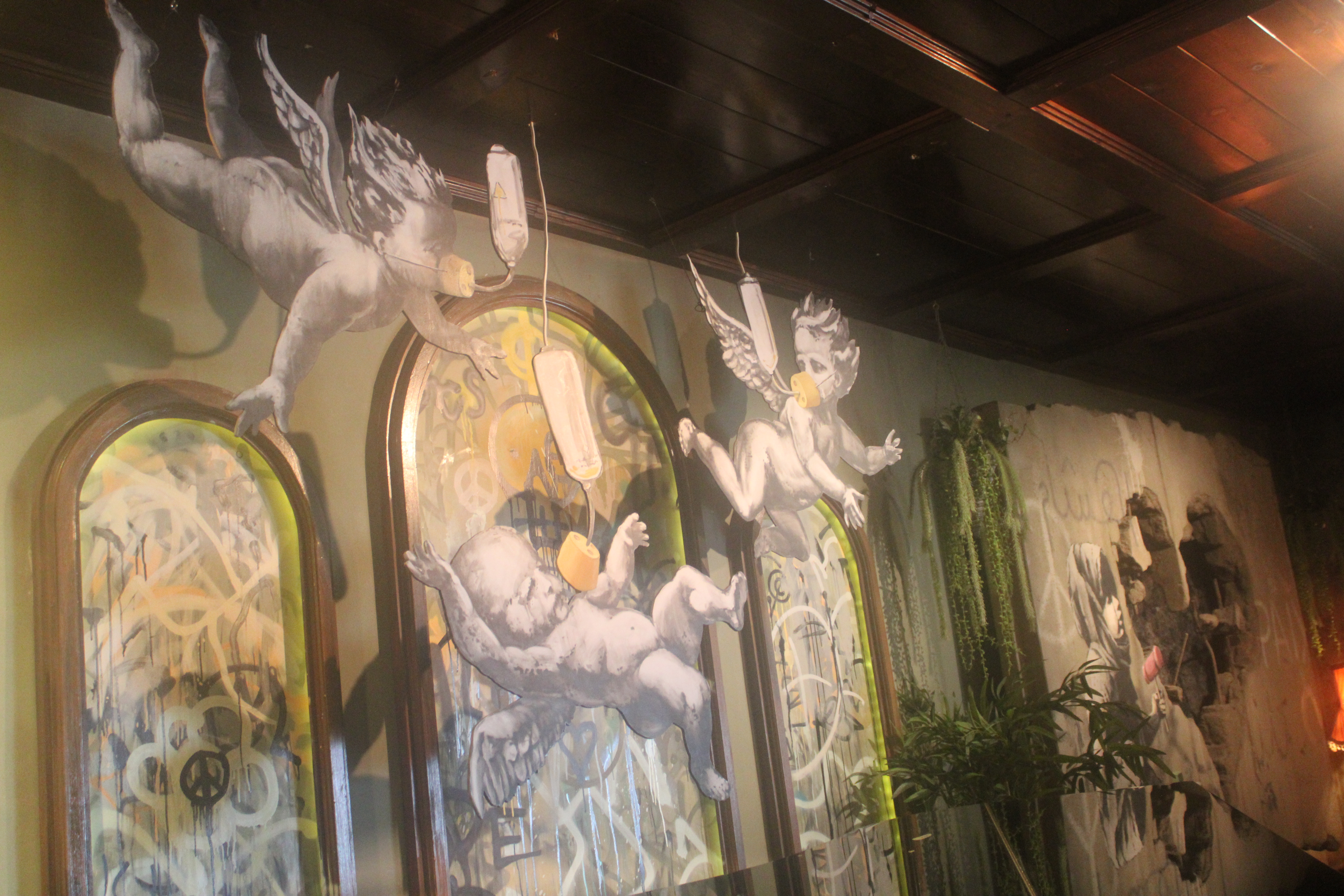
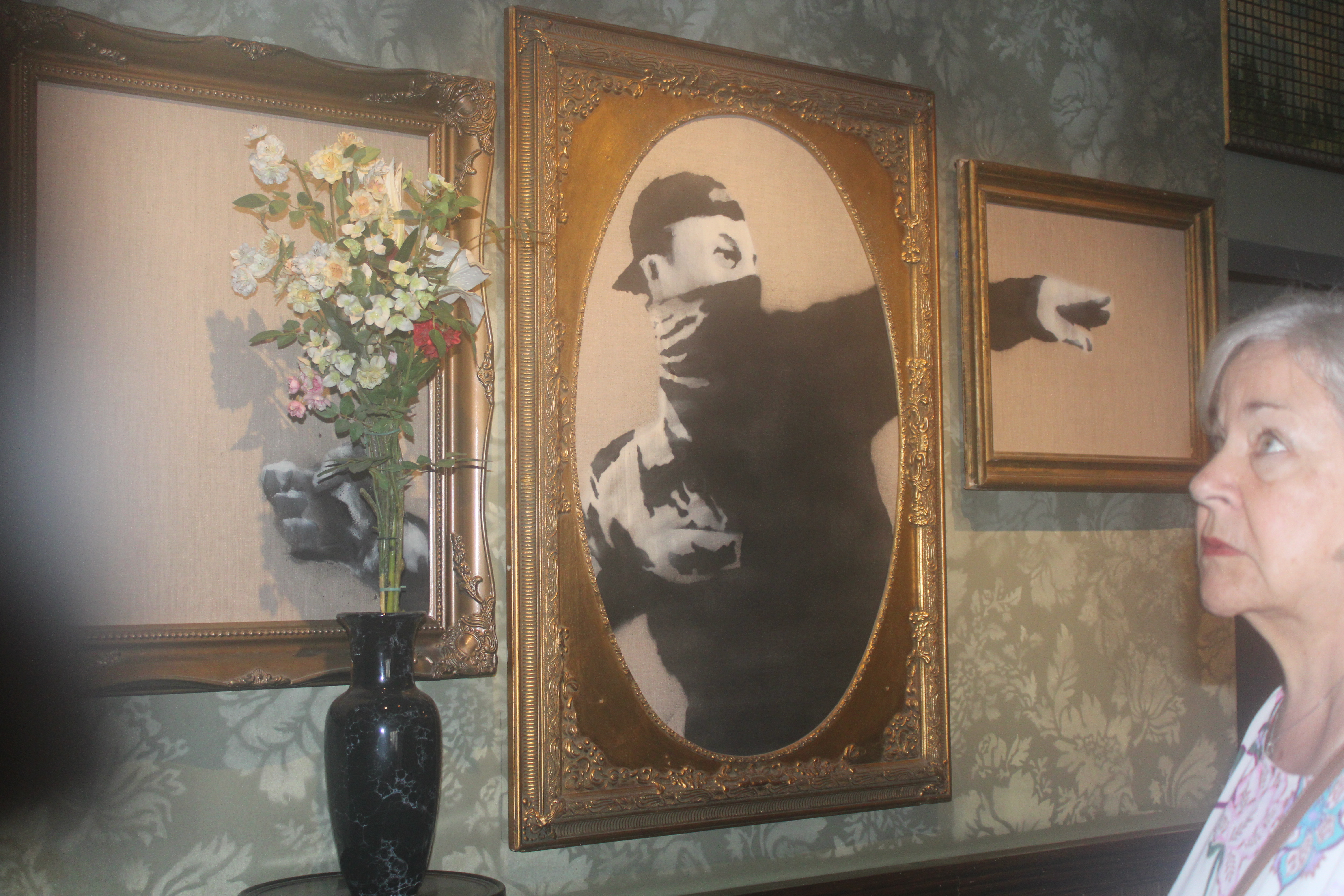
The museum and the art provoke multiple emotions – tears to clenched fists, horror to self-reflection.
Outside, the graffiti on The Wall, some created by the internationally celebrated Banksy, prompt the same sadness and anger with little glimpses of hope.
One poignant piece of art depicts a shrouded terrorist with a mirror in the eye area so when you look at it, you see your own eyes staring back.
I couldn’t help but wonder, “What is my role in all this?”
The answer came in two places.
Where meek souls will receive him, still the dear Christ enters in.
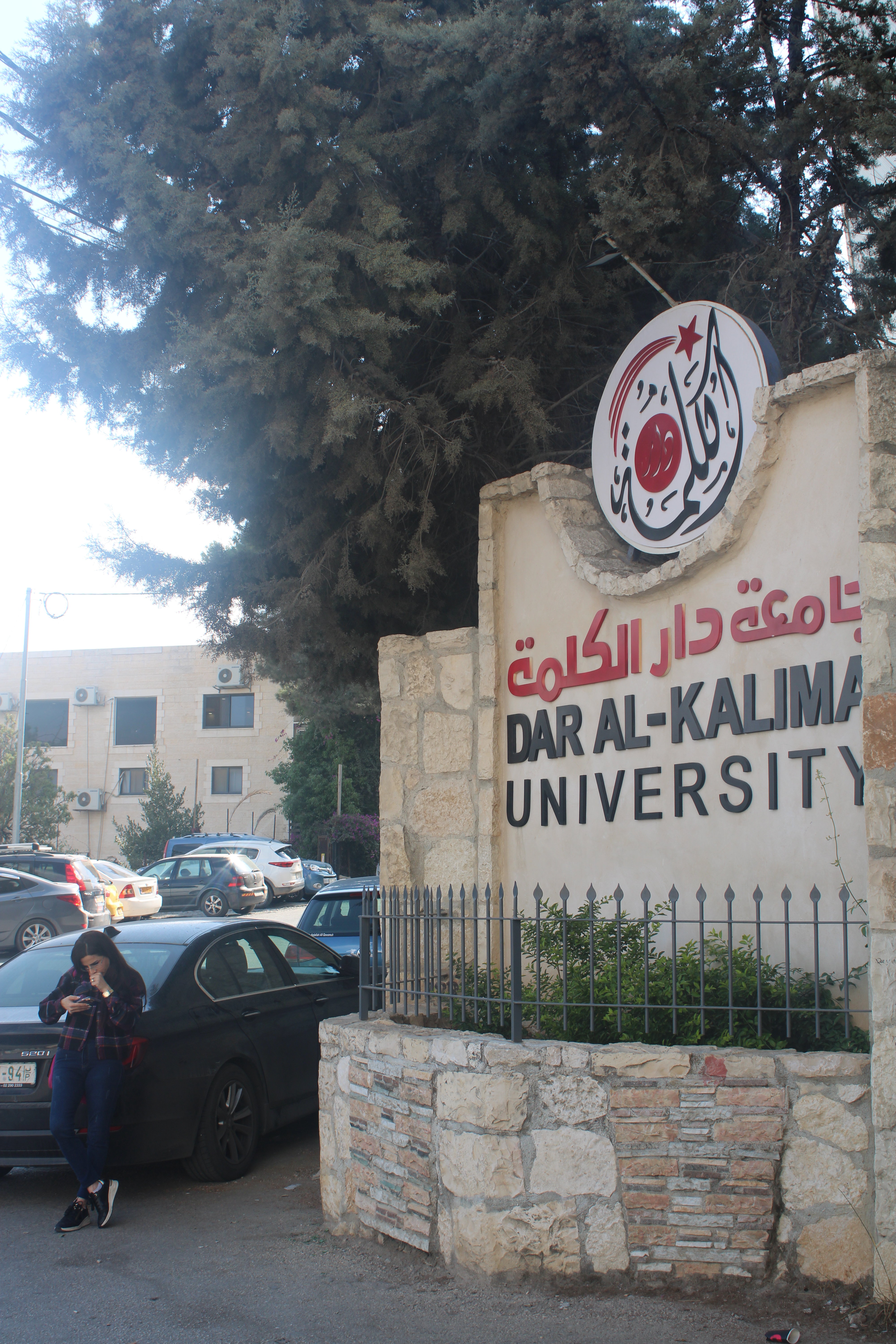
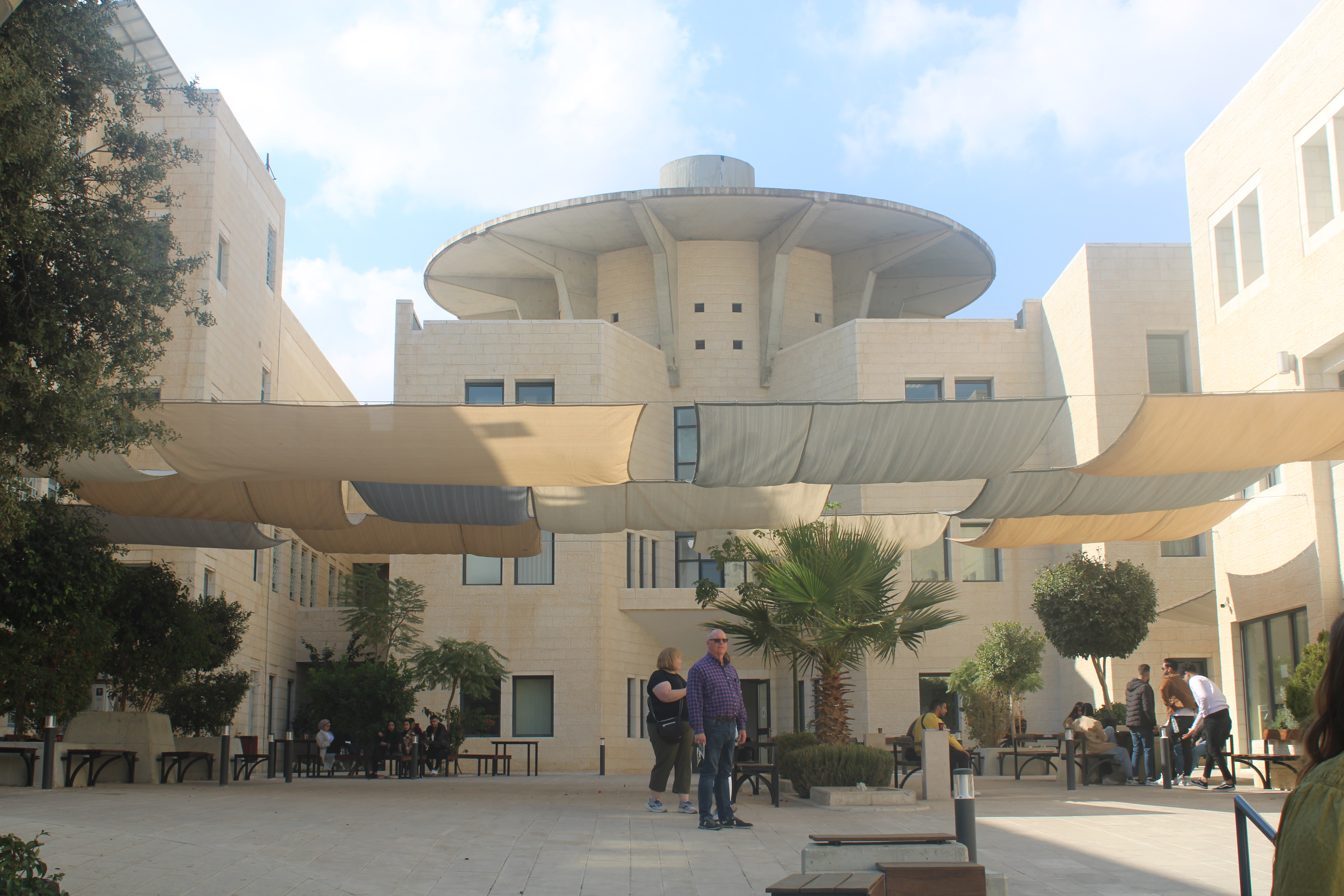
We had an opportunity to meet with a native of Bethlehem, who serves as a vice president of Dar Al-Kalima University, Rana Khoury.
She too declared, “We are strangled.”
In equally stark language, the woman, who has spent and spends time in the United States, said, “It is a very helpless place…. We are prisoners.”
Just driving down the highway in her hometown is a scary experience for Khoury and her fellow Palestinians.
At another point, Khoury, who is a Religion, Conflict, and Peace Initiative Fellow in Harvard Divinity School’s Religion and Public Life program, held her hands to her throat and declared, “We’re choking.”
The circumstances of life in the West Bank tell Palestinians “You are nothing,” Khoury said.
Yet, Khoury, who isn’t allowed to use the international airport in Tel Aviv or travel to Jerusalem because of her status as a Palestinian, tells all the students that she encounters, “You are not your circumstances.”
She and the university work to empower the students, and Khoury is developing a civic engagement curriculum for students at all Palestinian colleges.
She fights for hope.
And, at times sees its light.
Recently, she noted some of the university’s students took third place at the renowned Cannes Film Festival. The university is empowering its students to tell their story through the arts – whether it be through film, theatre, jewelry design, architecture or food.
Khoury is seeing the results. “Hope is manifesting itself.”
“Palestinians,” she said, “have developed the art of living with hope.”
For those of us who were returning to Canada and the United States and don’t see concrete, razor wire, and soldiers carrying automatic rifles on a daily basis, we asked Khoury, “What are we to do?”
Khoury was again direct. She said, “Once you see, it becomes a question of justice… Just keep speaking about it. You’ve seen it.”
Even more, she directed each of us to engage in matters of justice at home wherever we live. “Be open and engaged with questions of justice.”
That’s no easy directive even here, but it is essential for all who follow the savior born in Bethlehem, a community in distress then and now.
Khoury’s call to action is accentuated by sounds and images that I treasure from a worship service at The Evangelical Lutheran Christmas Church in Bethlehem.
Though the congregation traditionally worships in Arabic, we were able to join in and recite the Lord’s Prayer and sing hymns in English. In worship, the two quite distinct but equally beautiful languages merged into one of Love as they lifted to God.
Later in the service, we discovered that each member of the congregation is given a hunk of bread during the Lord’s Supper, not a tiny bite or cracker than can easily be consumed in one quick act. Returning to my pew after receiving the elements, I watched children walk back down the aisle after receiving communion. A little boy was cramming the bread dipped in wine into his mouth and spilling crumbs across the floor.
The beauty and grace overwhelmed me as the scene assured me of God’s abundant love for all His children.
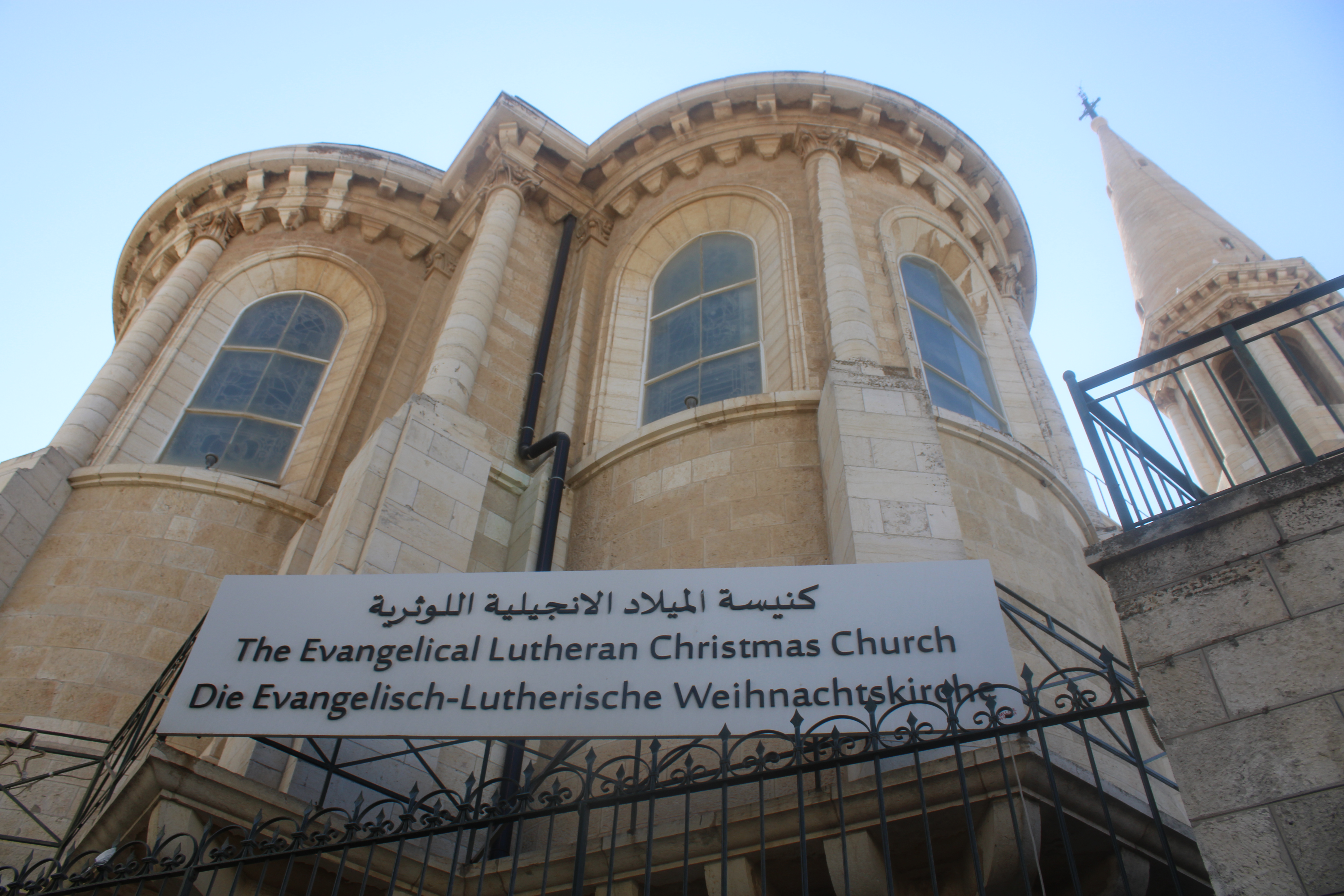
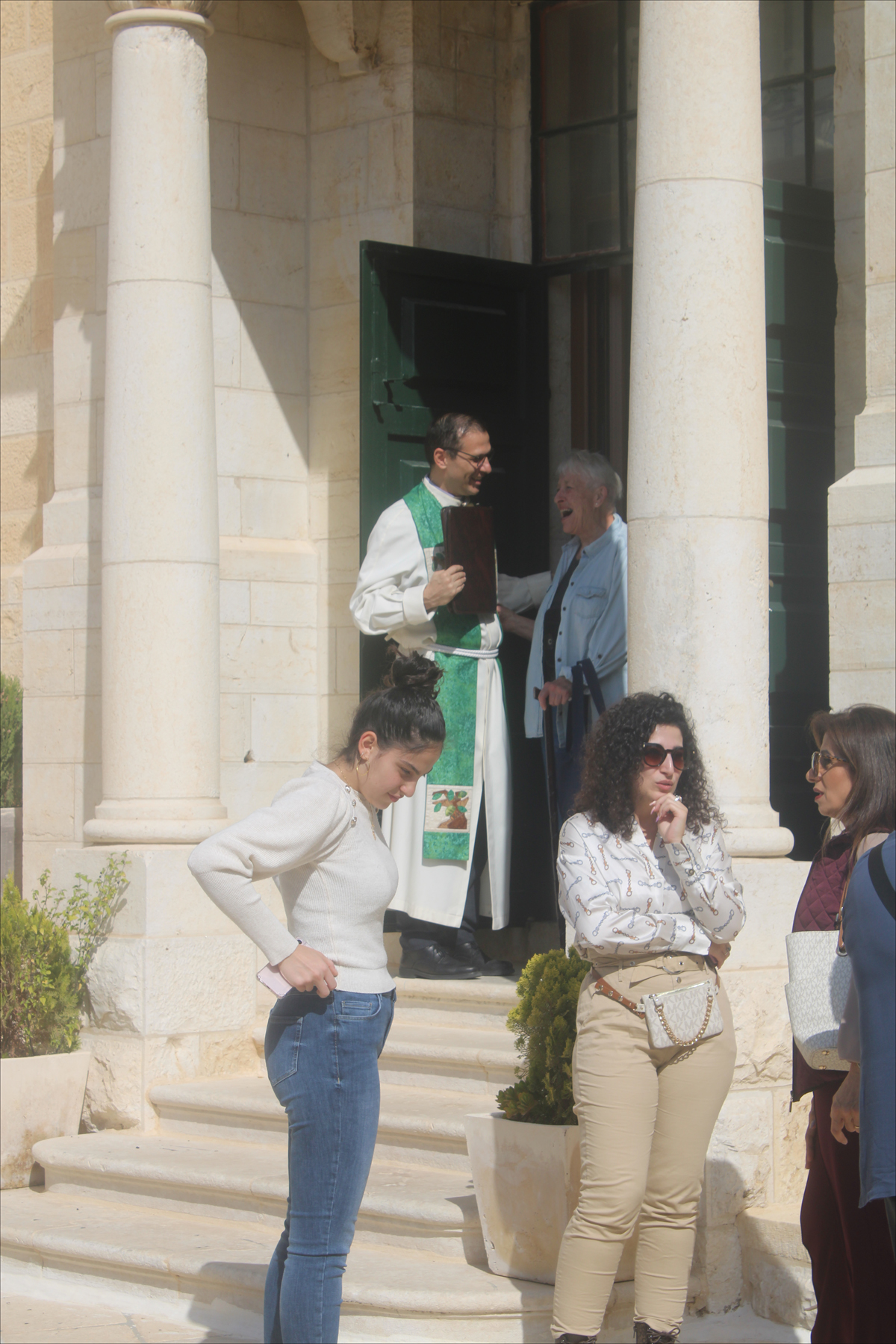
The pastor of Christmas Church, Munther Isaac, has written a book titled “The Other Side of the Wall: A Palestinian Christian Narrative of Lament and Hope.”
Isaac tells his story as a son of Bethlehem who knows the injustice and suffering firsthand but also believes in Jesus.
He writes, “Hope is not an exercise of waiting while doing nothing. What we hope for in our communities, nationals, and world should shape our… actions within them.”
During a more traditional moment in our pilgrimage, we visited a cave believed to have been one the shepherds who received the angelic message of Jesus Christ’s birth would have slept in.
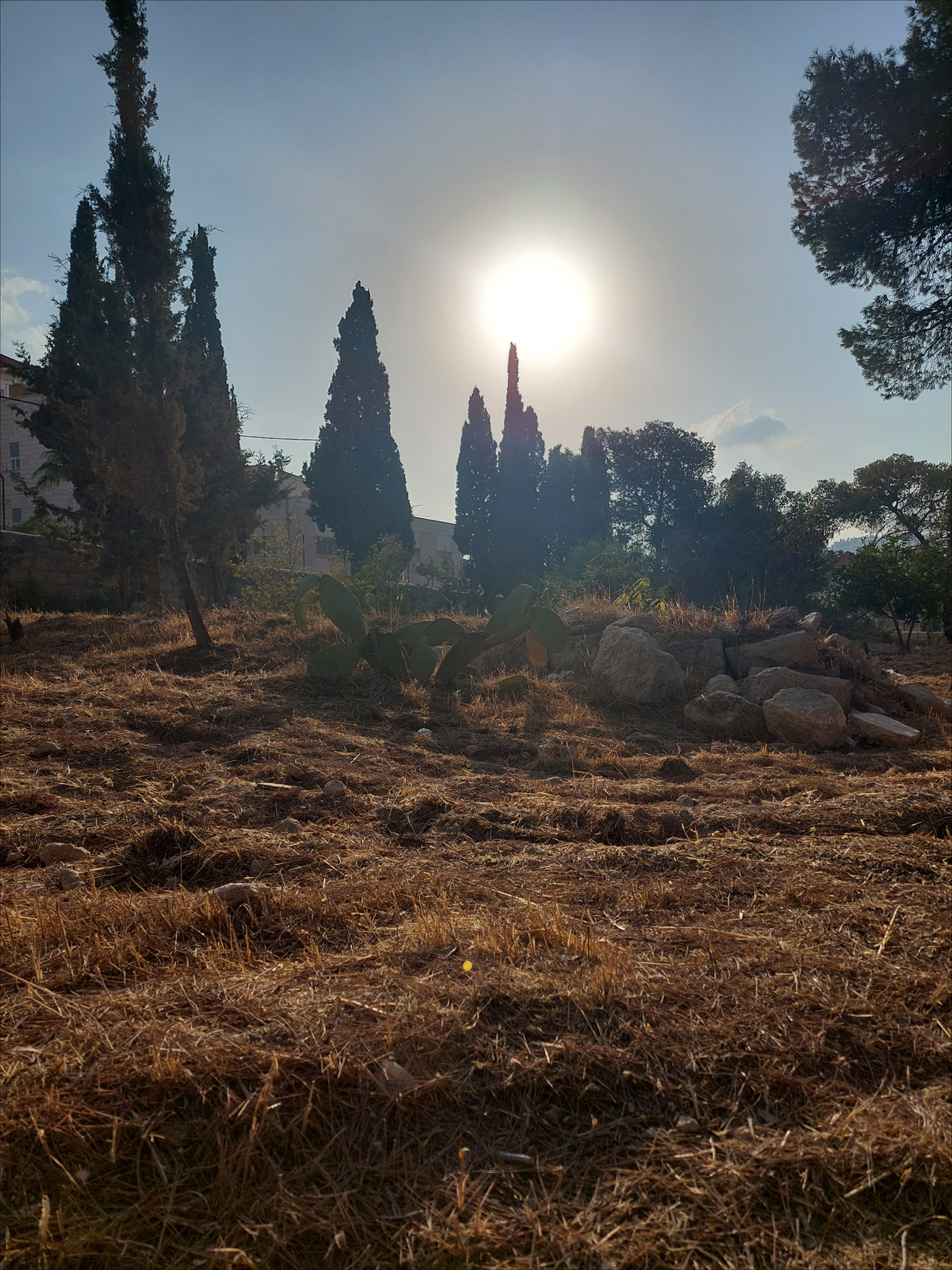
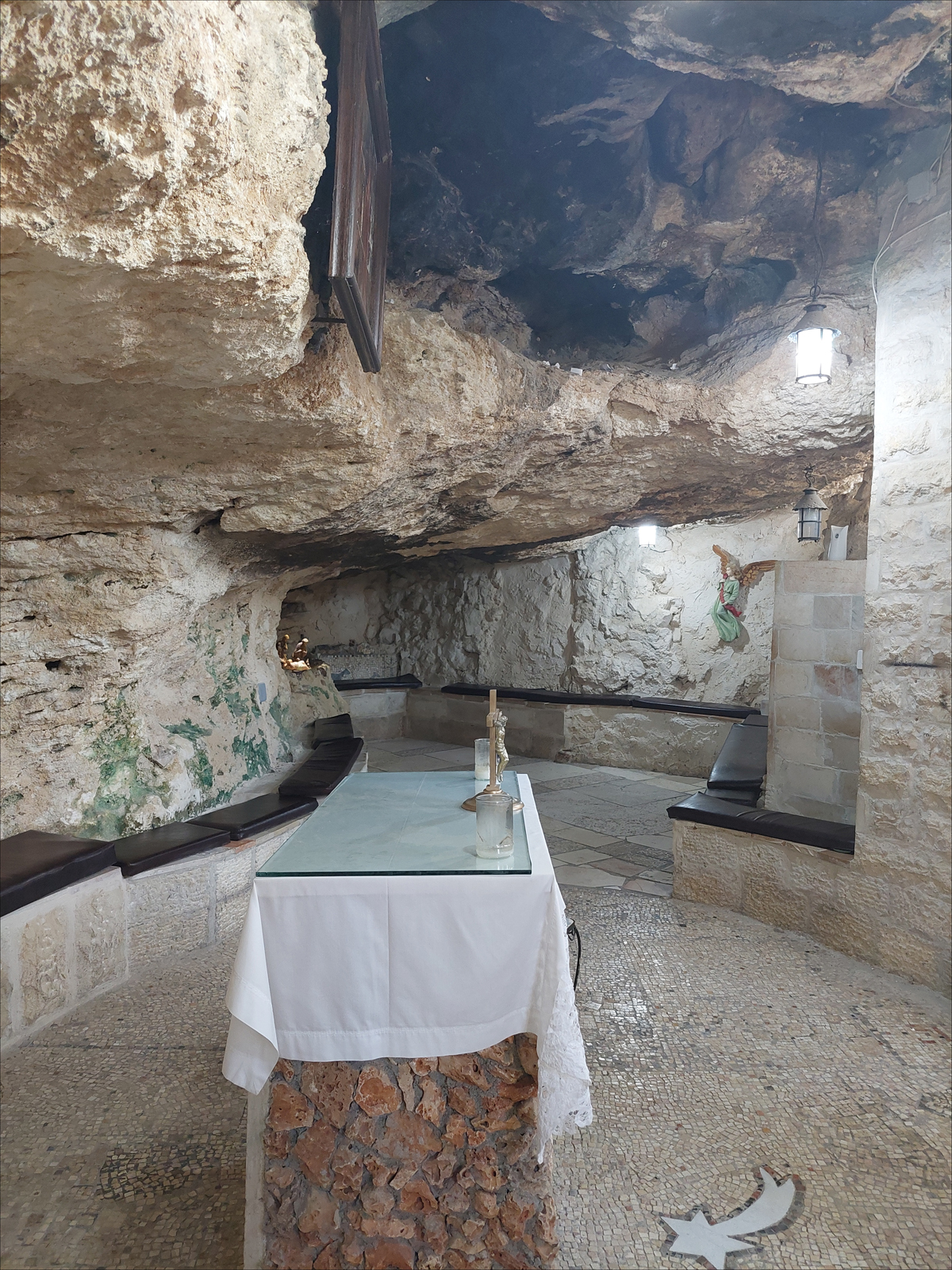
Sitting inside, we joined our voices together and sang “Gloria in Excelsis Deo,”or “Glory be to God on high,” as part of “Angels We Have Heard on High.”
A verse of the old carol cries out, “Come to Bethlehem and see him whose birth the angels sing; come, adore on bended knee Christ the Lord, the newborn King.”
In the faces of artists, a university leader, a pastor, and a little boy scattering crumbs, I saw the face of Jesus Christ.
My prayer this Christmas is that you’ll also see his face and hear the call to act for hope.
 Minding the Light